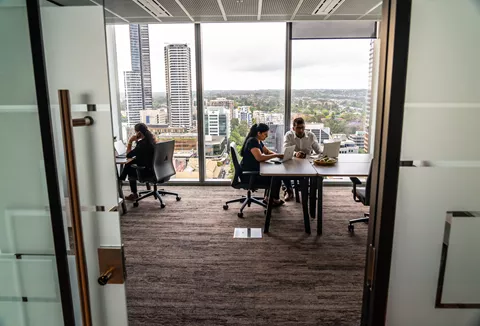
Planning an office rarely begins with furniture or floor plans. It usually starts with a question: how should the space actually support the way the business works?
An office space planning checklist helps answer that question. From layout and technology to meeting spaces and quiet areas, each choice affects how people engage with the workspace. So it’s important to get it right.
For London-based offices, the stakes can be particularly high due to the significant cost of renting office space. Poorly planned layouts often reveal their flaws only after teams have settled in.
A clear checklist reduces those risks. It connects workplace design to business priorities such as productivity, client experience, recruitment, and team growth. It also encourages a more balanced approach to planning, weighing practical needs alongside employee wellbeing and long-term flexibility.
The result? An office environment that functions well today and adapts more easily as the business evolves.
Office Space Planning Checklist (Quick Reference)
1. Define Business Objectives
Before thinking about layouts or furniture, step back and clarify what the office is meant to support. The most successful workplaces are designed around how a business plans to operate, not simply how many desks it needs today.
- Growth plans and hiring forecasts: Map expected team growth over the next two to five years to avoid designing a space that quickly feels cramped.
- Hybrid working strategy: Decide how often teams will be in the office. A three-day hybrid schedule requires different desk capacity than a fully office-based workforce.
- Collaboration vs focus priorities: Some teams thrive on interaction, while others require quiet concentration. The balance should guide how space is allocated.
- Desired office environment and culture: Whether calm and focused or collaborative and social, the workspace should reflect how the company operates.
2. Define Office Space Requirements
With objectives clear, the next step is translating them into practical space needs. This stage focuses on understanding how people actually use the office throughout a typical week.
- Current and projected headcount: Start with current employees and factor in expected hires to avoid costly redesigns later.
- Peak attendance modelling: Hybrid teams rarely attend simultaneously. Identifying peak days helps determine desk and space requirements.
- Required private spaces: Phone booths, private offices, and small meeting rooms often become essential once open plan spaces are in use.
- Required open spaces: Open areas support collaboration and informal interaction. Their size should match the company’s working style.
- Meeting rooms by size and frequency: Reviewing typical meeting sizes usually leads to a mix of small rooms, mid-sized spaces, and one larger room.
- Storage and wall space allocation: Equipment cupboards, shelving, screens, and whiteboards all compete for wall space that should be planned early.
3. Build Your Office Design Checklist
With requirements identified, the next step is translating them into a practical design checklist. This ensures each element of the office is considered before detailed planning begins.
- Workstations and desk ratios: Decide how many desks are required relative to team size. Hybrid offices often operate with fewer desks than employees.
- Open plan vs enclosed areas: Open layouts encourage collaboration but can create noise. A mix of open desks and enclosed rooms usually works best.
- Breakout and collaboration zones: Informal areas allow quick discussions without booking meeting rooms.
- Reception and client areas: For visitor-facing businesses, reception becomes the first impression and should feel organised and welcoming.
- Comms or server room requirements: Servers and networking equipment often require secure rooms with cooling and maintenance access.
- Office furniture requirements: Adjustable seating and modular furniture support comfort and different working styles.
4. Plan the Office Layout
At this stage, ideas begin turning into a physical layout. The goal is to arrange spaces in a way that feels natural for the people who will use them.
- Zoning open and private areas: Separate quiet work zones from busy collaboration spaces to reduce noise.
- Circulation and accessibility: Clear walkways allow people to move easily between desks, meeting rooms, and shared areas.
- Placement of office partitions: Glass or acoustic panels help define spaces without fully enclosing them.
- Protecting natural light: Windows should serve workspaces rather than storage areas or enclosed rooms.
- Efficient use of wall space: Walls often support screens, shelving, and whiteboards, so planning their use early avoids later adjustments.
5. Infrastructure and Furniture Planning
Behind the visible design sits the practical infrastructure that allows the office to function smoothly. Power, connectivity, and furniture choices all need careful planning.
- Power density and floor boxes: Workstations and meeting areas need reliable power access without cables crossing walkways.
- Data, Wi-Fi and AV in meeting rooms: Strong connectivity and integrated conferencing equipment prevent delays during meetings.
- Office furniture selection: Desks, seating, and storage should match both the layout and the team’s working style.
- Ergonomic standards: Adjustable chairs, suitable desk heights, and correct monitor positioning help reduce fatigue during long workdays.
6. Compliance and Safety Regulations
Every office fit-out must meet regulatory and safety standards. Addressing these requirements early helps prevent delays once design and construction begin.
- Accessibility requirements: Entrances, walkways, and shared spaces should be usable by everyone.
- Fire safety planning: Escape routes, alarms, and materials must meet safety standards.
- UK workplace regulations: Designs should comply with relevant health and safety obligations.
- Occupancy limits and emergency access: Desk layouts must allow safe evacuation even at full capacity.
7. Budget and Timeline Framework
Office planning also requires a clear understanding of cost and timing. Establishing a realistic framework early helps prevent delays and unexpected expenses.
- Office fit costs: Construction work such as partitions, flooring, lighting, and services typically forms the largest expense.
- Design and consultancy fees: Architects, designers, and project managers guide planning and delivery.
- Furniture and infrastructure budgets: Desks, seating, storage, networking, and AV equipment all require allowances.
- Programme milestones and approvals: Many London offices require landlord approval for layout changes before work begins.
Aligning Office Design with Business Objectives
What should your office actually help the business achieve?
Before deciding on layouts or furniture, it helps to ask how the space will support your operational goals.
How does your team spend most of its time? Are people meeting constantly, or working through complex tasks that require focus? The answers influence everything from desk density to the number and size of meeting rooms.
The physical environment also shapes how people feel at work. Is there enough natural light across the main working areas? Do employees have access to quiet corners as well as places to talk and share ideas? Small layout decisions often have a noticeable impact on energy levels and day-to-day comfort.
It is also worth thinking beyond the first year in the space. Will the office still work if the team grows, or if hybrid working patterns shift again? Flexible layouts, adaptable furniture, and multipurpose rooms can make it easier to adjust without starting the design process from scratch.
Creating a Practical Space Programme
How many workstations do you actually need? It sounds straightforward, yet the answer often changes once attendance patterns are examined. If most teams follow a hybrid schedule, desks may only need to accommodate peak days rather than the full headcount.
What about meeting rooms? Are they used constantly, or do calendars reveal a handful of predictable busy periods? Looking at how meetings typically happen helps determine the right mix of small rooms, medium collaboration spaces, and perhaps one larger room.
Open areas also require careful balance. Too many desks in a single space can make the office feel crowded and noisy. Too many enclosed rooms can leave large areas underused. Where should quiet work happen, and where should conversations naturally gather?
Storage deserves attention too. Where will shared equipment, supplies, or documents live? Screens, whiteboards, and shelving all compete for wall space that is often overlooked during early planning.
And do you really need a large boardroom? In many open plan offices, oversized meeting rooms sit empty most of the week. These are only some of the due diligence questions you must ask when renting an office.
Finally, will the furniture actually fit the space? Desk depth, chair movement, and circulation routes all influence how comfortable the office feels once people begin using it.
Designing an Effective Office Layout
An effective office layout shapes how people work, move, and interact throughout the day. The arrangement of desks, rooms, and shared spaces often determines whether the office feels calm and productive or crowded and distracting.
Open plan offices benefit from structure. Large desk areas support collaboration, but without quieter zones nearby they can quickly become noisy. Including small retreat spaces or focus areas allows employees to step away when concentration is needed.
The position of private rooms also affects acoustic comfort. Meeting rooms and phone booths are often most effective when placed along circulation routes or at the edges of open work areas, helping contain sound before it spreads across the workspace.
Partitions can help define different areas without closing the office in. Glass and acoustic panels are commonly used to separate spaces while preserving natural light across the main working areas.
Flexibility should also be considered during layout planning. Collaboration areas, meeting rooms, or open zones can often be designed to serve multiple purposes as the team grows or working patterns change.
Finally, a thoughtful layout supports employee wellbeing. Access to daylight, comfortable desk spacing, clear walkways, and areas for informal breaks all contribute to a healthier and more usable workspace.
Office Furniture and Workplace Comfort
Furniture often proves its value only after people have spent long days using it. A chair that feels comfortable during a quick showroom visit can feel very different after hours of desk work.
Durability plays a role here. Offices experience constant use, and well-built desks, chairs, and tables often last far longer than cheaper alternatives.
Ergonomics is just as important. Adjustable chairs, suitable desk heights, and proper monitor positioning allow employees to work comfortably without constantly adjusting their posture.
Flexibility also helps as teams evolve. Modular desks or movable tables can make it easier to adapt the layout over time.
Storage still deserves attention as well. Lockers, cupboards, and thoughtful wall use help prevent clutter from spreading across desks and shared areas.
Infrastructure Planning for a Successful Office Fit
Good infrastructure planning sits quietly behind every office that simply works. Power, connectivity, and technical systems rarely attract attention until something goes wrong, which is why they deserve careful thought early in the design process.
Power density is one of the first considerations. Desks, collaboration areas, and meeting rooms all need reliable access to outlets and charging points. Floor boxes or perimeter power can prevent cables running across walkways.
Data connectivity matters just as much. Strong Wi-Fi coverage across the entire office is essential, but fixed data cabling is still important for workstations, printers, and meeting room equipment.
Meeting rooms also require integrated audiovisual systems. Screens, cameras, microphones, and connection points should be planned in advance so the technology works seamlessly when teams gather or join remote colleagues.
Behind the scenes, many offices also require a dedicated communications room. Servers, networking equipment, and switches often need secure spaces with appropriate ventilation or cooling.
Infrastructure should be coordinated with the overall office design. Power points, data ports, and AV equipment need to align with desk locations, meeting rooms, and collaboration areas so the technology supports the workspace rather than disrupting it.
Compliance and Safety in UK Office Space Planning
Compliance is rarely the most visible part of office design, but it shapes many of the decisions behind the scenes. Desk layouts, corridor widths, and even meeting room placement can all be influenced by safety requirements.
Accessibility is one of the first considerations. Offices should allow comfortable movement throughout the space, with entrances, walkways, and shared facilities usable by everyone who enters the building.
Fire safety also affects how space is organised. Escape routes must remain clear, and occupancy limits influence how densely desks and meeting rooms can be arranged.
During the fit-out itself, contractors carry clear responsibilities. Construction work must follow building management rules, safety procedures, and approved plans.
Ultimately, every office project must meet UK workplace safety regulations. Addressing these requirements early keeps the design process smoother and avoids unexpected changes once work begins.
Budget and Timeline Planning for Your Office Fit
Office projects often succeed or struggle long before construction begins, which is why establishing a clear budget and a realistic timeline at the outset can prevent delays, rushed decisions, and unexpected costs later in the process. The budget is also a time where it's important to consider any hidden office costs that may skew your numbers.
In London, office fit-outs typically fall into several main cost categories, with construction work such as partitions, flooring, lighting, and building services often forming the largest share of the overall budget.
Professional fees should also be factored in, as workplace designers, architects, and project managers usually guide the planning, approvals, and coordination required to deliver the finished space.
Furniture and technology represent another important allowance, covering desks, seating, storage, and meeting room equipment such as screens and video conferencing systems.
Many projects also include a contingency allowance, recognising that building conditions, landlord requirements, or design adjustments can emerge once work begins.
Common Office Design and Office Fit Mistakes
Many office design problems only become obvious once the space is in daily use.
A common mistake is prioritising aesthetics over functionality. A space may look impressive on opening day but struggle to support how people actually work.
Fully open plan layouts can create similar issues. Without quiet rooms or small meeting spaces, noise and interruptions quickly become part of the working day.
Partition placement can also have unintended effects. Blocking windows with enclosed rooms often leaves the main workspace darker than expected.
Infrastructure is another area frequently underestimated. Power access, data connectivity, and meeting room technology all need careful planning.
Finally, employee wellbeing is sometimes overlooked. Layout, lighting, and desk comfort all influence how people feel and perform throughout the day.
Frequently Asked Questions